Window Regulator Repair in Irving, TX
Window regulator repair for cables, tracks, and scissor-style mechanisms. We replace worn regulators to stop windows from falling, binding, or operating slowly.
Call for an exact quote on your vehicle
Get My Quote
Six fields, 30 seconds. We'll call you back with a quote.
Signs You Need This Service
- Window drops inside the door
- Window binds or tilts
- Grinding or popping noise
- Window moves slowly or unevenly
What a Window Regulator Does
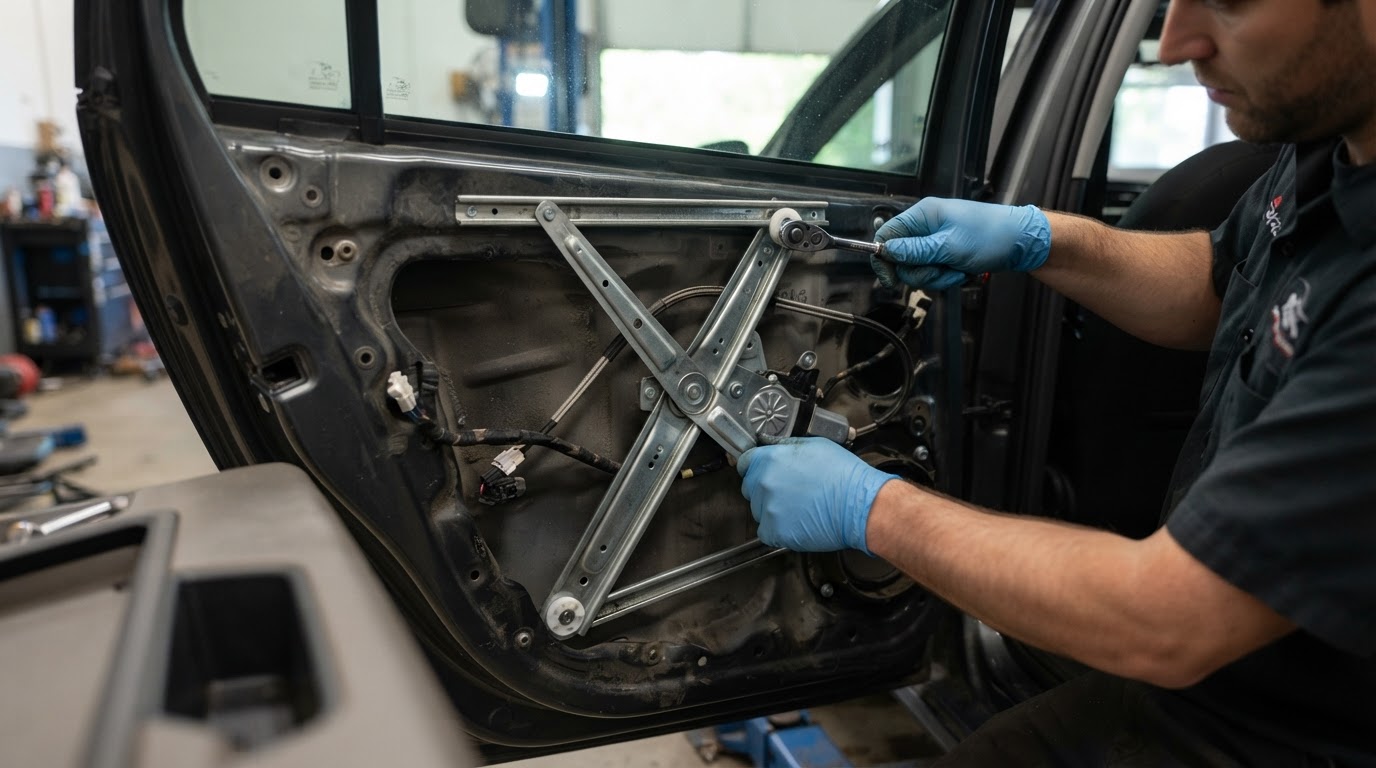
The regulator is the mechanism that raises and lowers the window. Modern vehicles use cable-operated regulators; older vehicles use scissor-style regulators. Both can fail from cable fatigue, worn rollers, or bent tracks. A failed regulator lets the glass drop, bind, or move unevenly.
Symptoms of Regulator Failure
A failing regulator causes the window to move slowly, drop inside the door, tilt or bind in the channel, or make a grinding or popping noise. If you hear cable noise, stop using the window immediately — continuing to operate it can shatter the glass.
The Repair Process
We remove the door panel, extract the failed regulator, inspect the track and rollers, install a new OEM-equivalent regulator, lubricate the channel, and test the full cycle including auto-up reversal. We torque all fasteners to spec to prevent recurrence.
Regulator vs Motor
The regulator is the mechanical mechanism; the motor provides the power. Both can fail, and symptoms overlap. We test both to isolate the cause so you do not pay for a part you do not need.
Quality and Support
Regulator repairs use OEM-equivalent parts and are performed by certified technicians. If the glass shattered during the failure, the replacement glass is installed in the same visit.
Cable vs Scissor-Style Regulators
There are two main types of window regulators: cable-operated and scissor-style. Cable regulators are used on most modern vehicles — they use a steel cable wound around a pulley to move a platform that the glass attaches to. They are compact and quiet but the cable can fray and snap over time. Scissor-style regulators are used on older vehicles and some trucks — they use a zigzag arm mechanism that pushes the glass up and down. They are more durable but bulkier. We carry both types and match the original factory design. Using the wrong type of regulator can cause the glass to bind, tilt, or fail to seal properly against the weatherstrip. We always use the correct regulator for your specific vehicle make, model, and year.
What Happens When a Regulator Cable Snaps
When a regulator cable snaps, the glass is no longer supported and it drops into the door cavity. On a vehicle with tempered door glass, the sudden drop often shatters the glass into hundreds of small pieces inside the door. This is why we always tell customers: if you hear a grinding or popping noise from your window, stop using it immediately. The noise means the cable is fraying, and if you continue to operate the window, the cable will snap and the glass will fall. A regulator repair before the cable snaps costs a fraction of what a regulator-plus-glass replacement costs after the cable snaps. If the glass has already fallen and shattered, we vacuum the door cavity, replace the regulator, install new glass, and test the full system in one visit — but the cost is significantly higher than if the regulator had been repaired before the failure.
Why We Use OEM-Equivalent Regulators
The regulator is a precision mechanism — the cable tension, the roller diameter, the track geometry, and the mounting points must all match the original factory specification for the window to operate smoothly and seal correctly. Cheap aftermarket regulators often have slightly different cable lengths, weaker springs, or imprecise mounting points that cause the window to bind, tilt, or fail to seal against the weatherstrip. We use OEM-equivalent regulators from reputable manufacturers that match the original specifications. These regulators cost slightly more than budget alternatives, but they last longer, operate more quietly, and do not cause the recurring problems that cheap regulators create. A regulator is not a part to cut corners on — it is the mechanism that your window depends on every single day.
Preventing Future Regulator Failures
Regulator failure is often preventable with proper maintenance. The window channels — the tracks that the glass slides in — collect dirt and dust over time, increasing friction that strains the regulator cable and motor. Lubricating the channels with a silicone-based lubricant every year or two keeps the glass moving smoothly and reduces the load on the regulator. If you live on a dirt road or in a construction area — common in parts of Irving near the Highway 183 corridor — your windows are exposed to more dust and debris, and more frequent lubrication is worthwhile. If your windows are getting slow or noisy, do not wait for the regulator to fail — have the channels lubricated and the regulator inspected. Preventive maintenance is always less expensive than a failure repair.
Expert Advice
Address auto glass damage early. A small chip or crack can spread rapidly under Texas temperature swings and road vibration, turning a simple repair into a full replacement. Call us at (972) 579-7400 for same-day service across Irving and the DFW metroplex.
Reviews
Our customers leave honest reviews on our Google Business Profile. We do not publish invented testimonials on this site.
Window Regulator Repair — Frequently Asked Questions
Answers to the most common questions about this service from Irving and DFW drivers.
How long does regulator repair take?
Should I stop using a noisy window?
Do you replace both the regulator and motor?
What is the difference between a cable and scissor-style regulator?
Can lubricating the window channel prevent regulator failure?
Decision Guides
Not sure where to start? These guides help you decide what your vehicle needs.
Explore Other Services
Serving Irving & All of DFW
Window Regulator Repair is available at our shop at 1905 E Shady Grove Rd, Irving, TX 75060, or our mobile units come to you anywhere in Irving and across the DFW metroplex.
1905 E Shady Grove Rd, Irving, TX 75060
Get directions →Damaged Glass? Don't Wait.
A small chip can spread into a full crack overnight. Call now for same-day mobile service across Irving and the DFW metroplex — we file the insurance claim and bill the insurer directly, so you pay only your deductible.